SmartGovt — Village Administration & Services
Village government platform with resident and household records, document services, GIS, regional statistics, RT/RW administration, a citizen portal, and Desa Anti Korupsi (Anti-Corruption Village programme) evaluations.
Running in production on 3 domains — the product site plus one deployment per regional government.
Screenshots
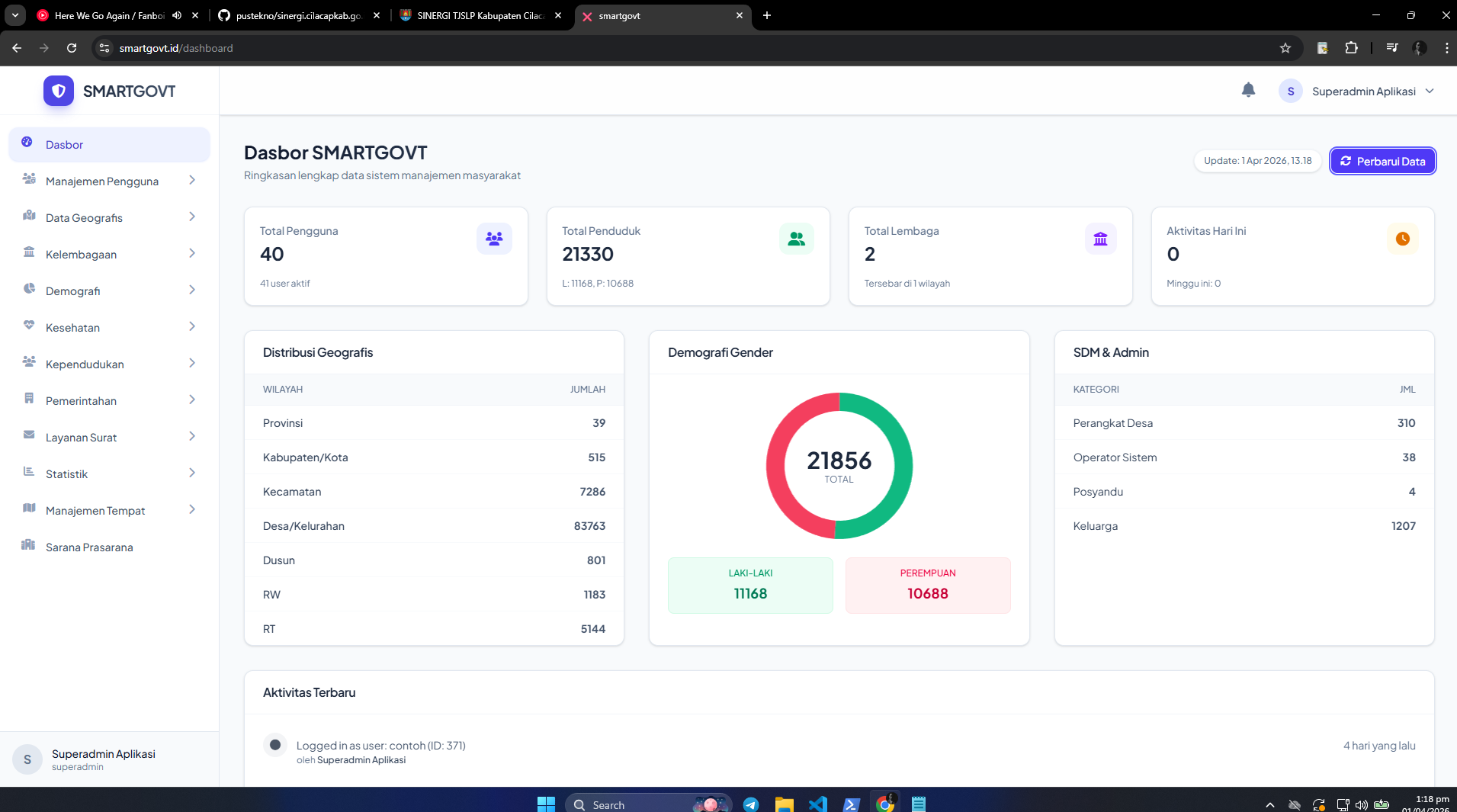
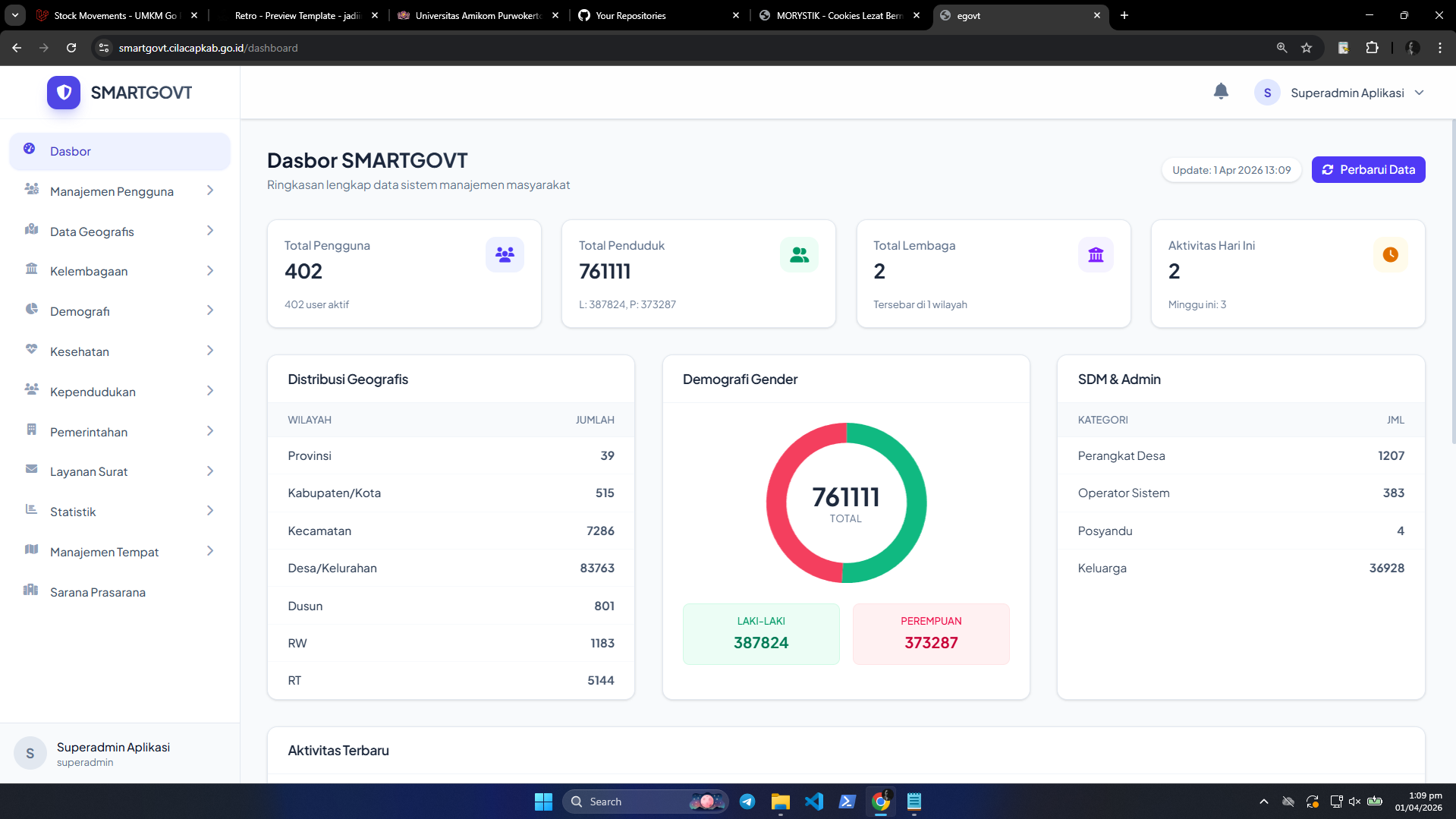
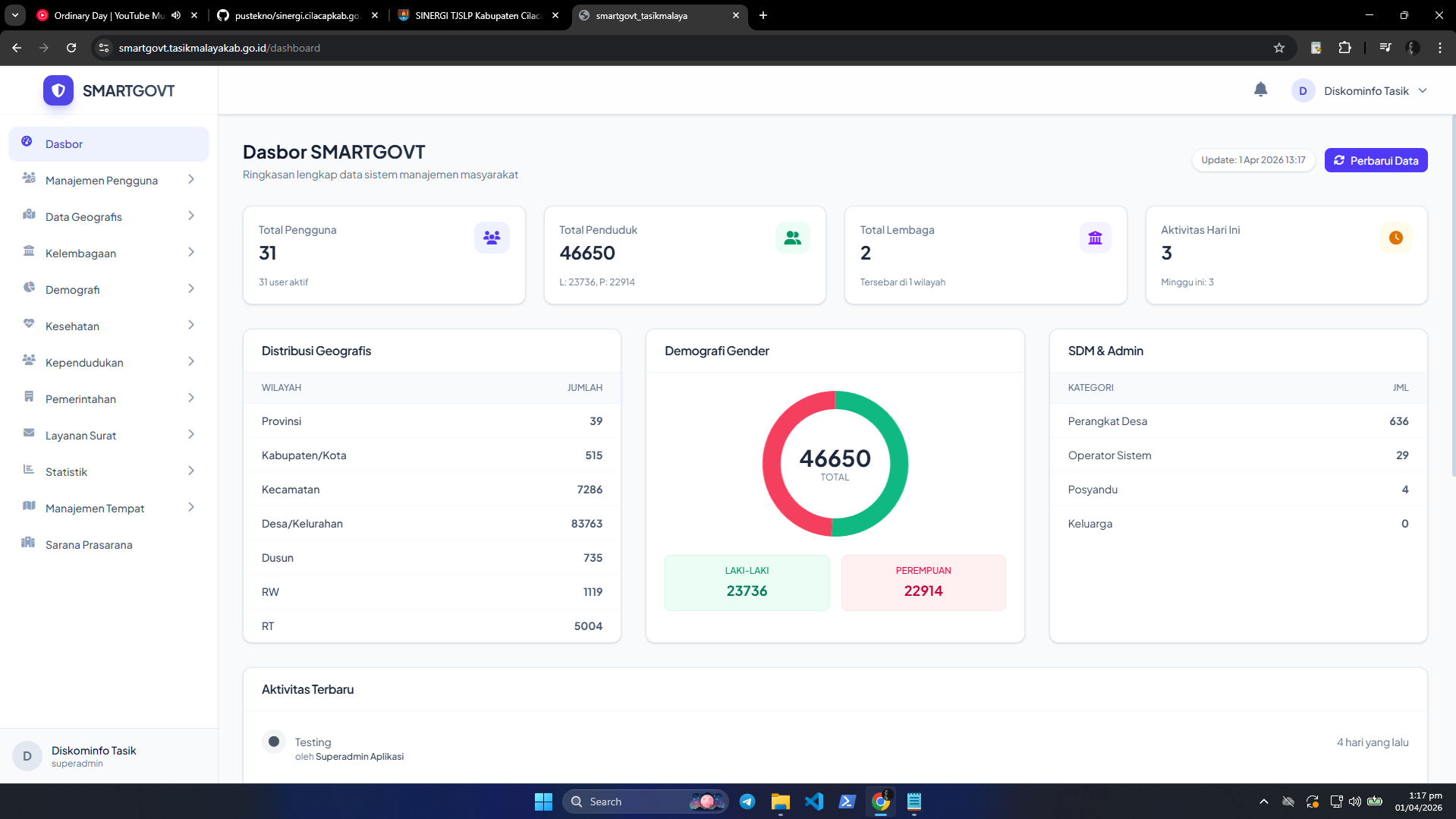
Overview
What this system does.
SmartGovt connects population administration, public services, and regional data collection in a large Laravel application with over 100 data models and 180 database migrations. Resident records, family cards, households, officials, places, and infrastructure are managed according to geographic scope and user authority. Population events such as births, deaths, departures, arrivals, residence registration, data corrections, and family-card splits each have their own recording workflow.
Document services cover document types and templates, a template editor, application forms, approval or rejection by officials, signatures, issuance, PDF downloads, and verification through QR codes or uploaded files. Documents can be organised into folders and shared through public pages, while WOPI integration provides document editing through an external editor service. Service pages can also be embedded in other websites using embed tokens.
Beyond document services, SmartGovt provides household and individual surveys, verification of geotagged photographs, demographic statistics with historical snapshots, maps of residents and facilities, and spatial data imports through GIS services. The Desa Anti Korupsi module manages components, indicators, evidence, and verification. Community administration covers events with RSVPs and minutes, cash books, dues, savings, and community rotating savings groups (arisan). The citizen portal adds appointments, a guest book, important contacts, and emergency alerts with push notifications. Integration, SSO, and API layers connect these records to other applications in the village ecosystem, including its companion mobile application.
Feature inventory
Highlights
40 capabilities verified against the project source.
Population records
- Population records: resident profiles, NIK identification-number lookup, photographs, and change histories
- Supporting resident data: contacts, disabilities, health coverage, pregnancy, and vaccinations
- Family cards: families, family members, and family-card splits
- Population events: births, deaths, departures, arrivals, and residence registration
- Outgoing migration with destination country or region records
- Resident data correction and validation, including education and employment updates
- Queued resident and household imports with downloadable failed rows
- Exports of residents, primary households, additional households, and family records outside households
- Household records, members, verification status, and map locations
- Household and individual surveys, integrated statistics, poverty, and uninhabitable housing
- Household attachments and photo galleries with GPS-coordinate checks
- Integrated data dashboard for monitoring data collection completeness
- Regional reference data from provinces, regencies, districts, and villages to hamlets, RW, and RT neighbourhood units
- Bulk RW/RT creation and a cached regional hierarchy for fast searches
- Village officials, positions, operator accounts, temporary accounts, and users’ regional access
- Demographic reference data: education, employment, religion, disabilities, blood types, marital status, family relationships, citizenship, family planning, community health posts, and age groups
Document services
- Document types, document templates, template editing and duplication, and service forms
- Document applications with service selection and applicant information
- Document approval and rejection, including batch application processing
- Document issuance, previews, printing, signatures, and PDF downloads
- Document verification through QR scanning or uploaded files
- Document folders, file moves, sharing links, and public downloads
- Document-editor integration through the WOPI protocol
- Service and DAK pages embedded in other websites using embed tokens
Facilities, places, and GIS
- Facility records, facility-access surveys, and verified photo galleries
- Places, place types, and statistics by place
- GIS maps with household, resident, facility, and place layers
- KML/KMZ imports through an integrated GIS service
- Statistics on population, employment, services, officials, households, and infrastructure
- Historical population, event, and service snapshots for comparisons between periods
Desa Anti Korupsi
- Desa Anti Korupsi: components, indicators, evidence uploads, verification, and progress monitoring
Community administration
- Community events: participants, RSVPs, check-in, checklists, decisions, follow-up actions, minutes, and reminders
- Community cash books: transaction requests, approvals, reversals, reconciliation, and closing
- Community dues: billing rules, bill issuance, payments, and receipts
- Community savings with withdrawal periods and rotating savings groups with contributions and draws
- Citizen portal: appointments, guest book, important contacts, and duty schedules
- Emergency alerts with push notifications to subscribed residents’ devices
Integration and access
- Integration connectors, installations, message queues, and synchronisation with other applications
- Citizen authentication, SSO, user roles and permissions, and activity logging
- Resident, regional, document, event, and DAK APIs for the companion mobile application
Capabilities
What it is built to handle.
Implementation highlights documented in the project source.
- Regional mapping
- GIS
- Residents, households, and facilities
- Public services
- Documents
- Applications through QR verification
- Desa Anti Korupsi
- DAK
- Indicators, evidence, and verification
Tech stack
Built with 19 technologies.
- Laravel 12
- PHP 8.2
- Blade
- Alpine.js
- Tailwind CSS 4
- Laravel Octane
- RoadRunner
- Laravel Sanctum
- JWT Auth
- Laravel Socialite
- Spatie Permission
- Spatie Media Library
- PHPWord
- DomPDF
- Endroid QR Code
- Intervention Image
- Maatwebsite Excel
- Amazon S3
- MySQL
Common questions
What people usually ask.
How many villages can one SmartGovt installation serve?
It is built around regional scope and user authority rather than one village per install, so a single deployment can serve every village in a regency with separated data and per-region permissions. It currently runs for three regional governments on their own domains.
Can residents verify a document without visiting the office?
Yes. Issued documents carry a QR code, and verification also accepts an uploaded file. Both resolve against the issuing record, so a document can be checked by anyone holding it.
How does existing resident data get in?
Through queued Excel imports that report failed rows as a downloadable file, so bad records are corrected without repeating the whole import. Where data only exists on paper, the companion Bot OCR KK reads photographs of family cards into the same database.
Same field
Related projects.
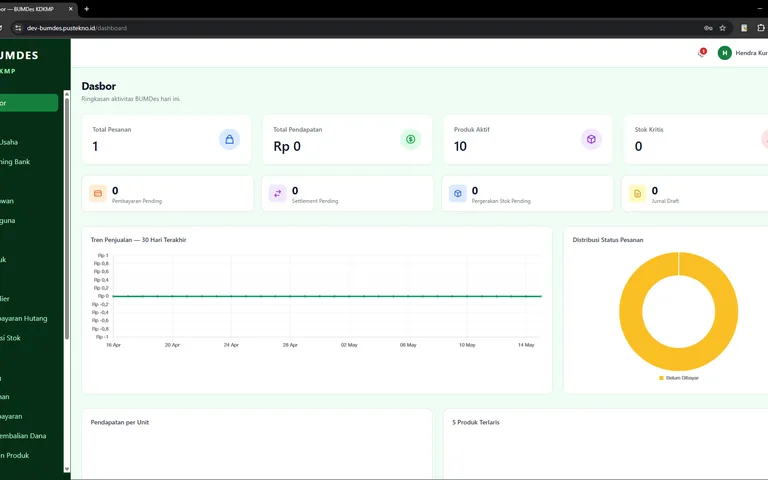
Mekar Cilacap — BUMDes/KMP Portal & Marketplace
A digitisation platform for Cilacap Regency’s BUMDes: a Next.js 16 frontend with a separate Laravel API for entity directories, a product marketplace, cash records and monthly reports, accountability reports, work programmes, and profit sharing.
Next.js 16 · React 19 · TypeScript · Tailwind CSS 4 · +10
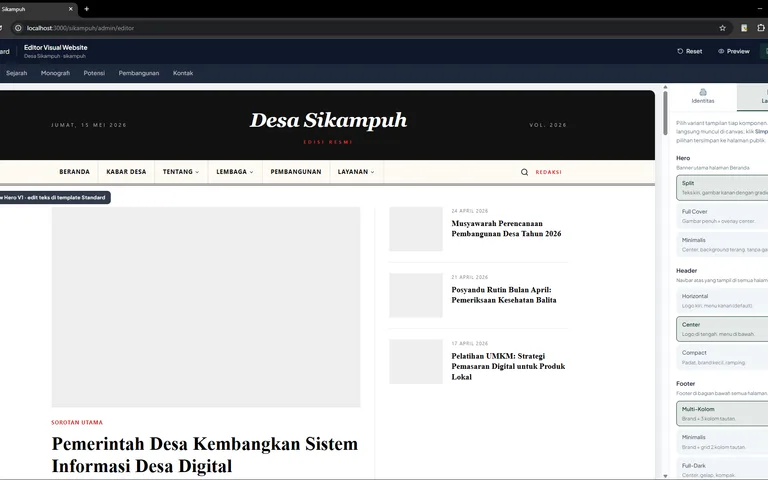
Web Builder — Village Website SaaS
A multi-tenant SaaS platform for village websites: a GrapesJS visual editor, custom domains with on-demand TLS, WordPress imports, SEO analysis, and SmartGovt data integration.
Next.js 15 · React 19 · TypeScript · Laravel 13 · +12
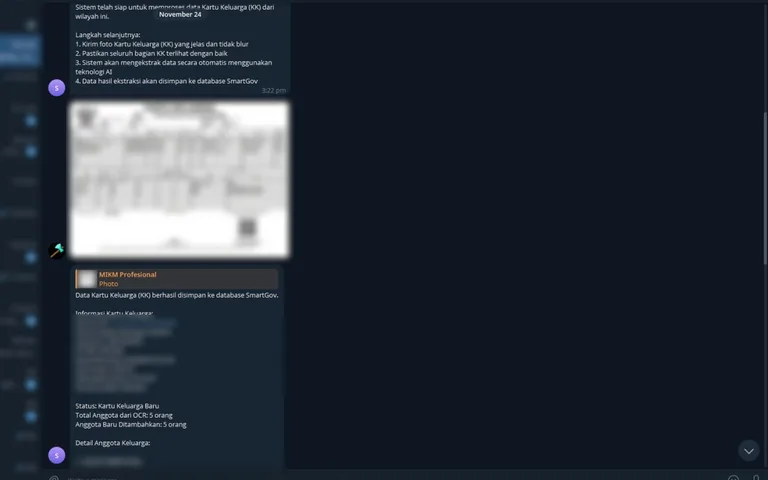
Bot OCR KK — Data Extraction via Telegram
A Telegram bot that extracts Kartu Keluarga photographs using Google Gemini, validates data and regional references, and saves the results to the SmartGov database.
Node.js · Telegram Bot API · Google Gemini · MySQL · +3