Jadiin Demo — Paste HTML, Send a Link
A free Jadiin Online service for freelancers: paste HTML, CSS, and JavaScript, preview it at phone widths, and publish it as demo.jadiin.online/name for a client to open from WhatsApp, inside a sandbox with phishing safeguards.
Screenshots
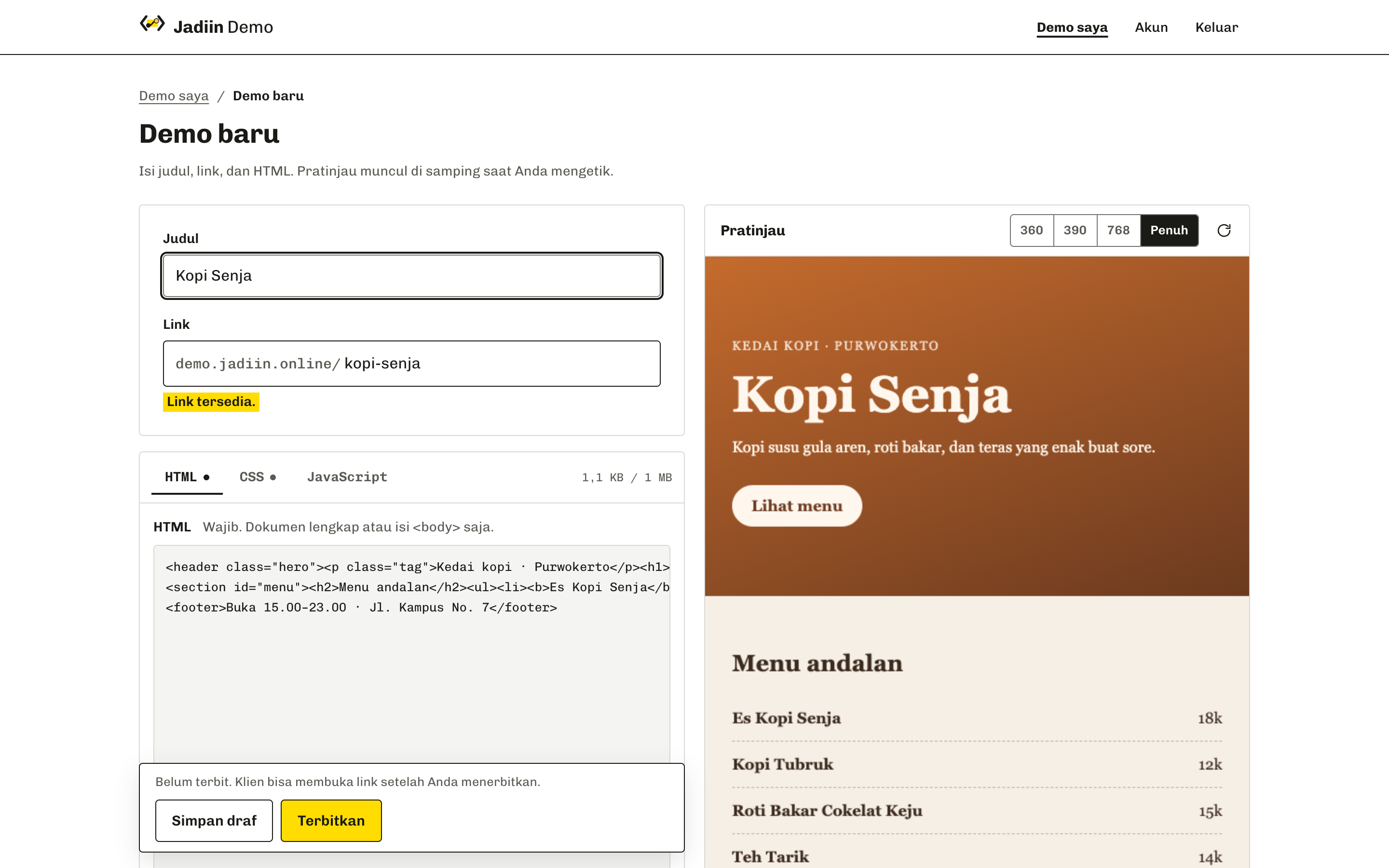
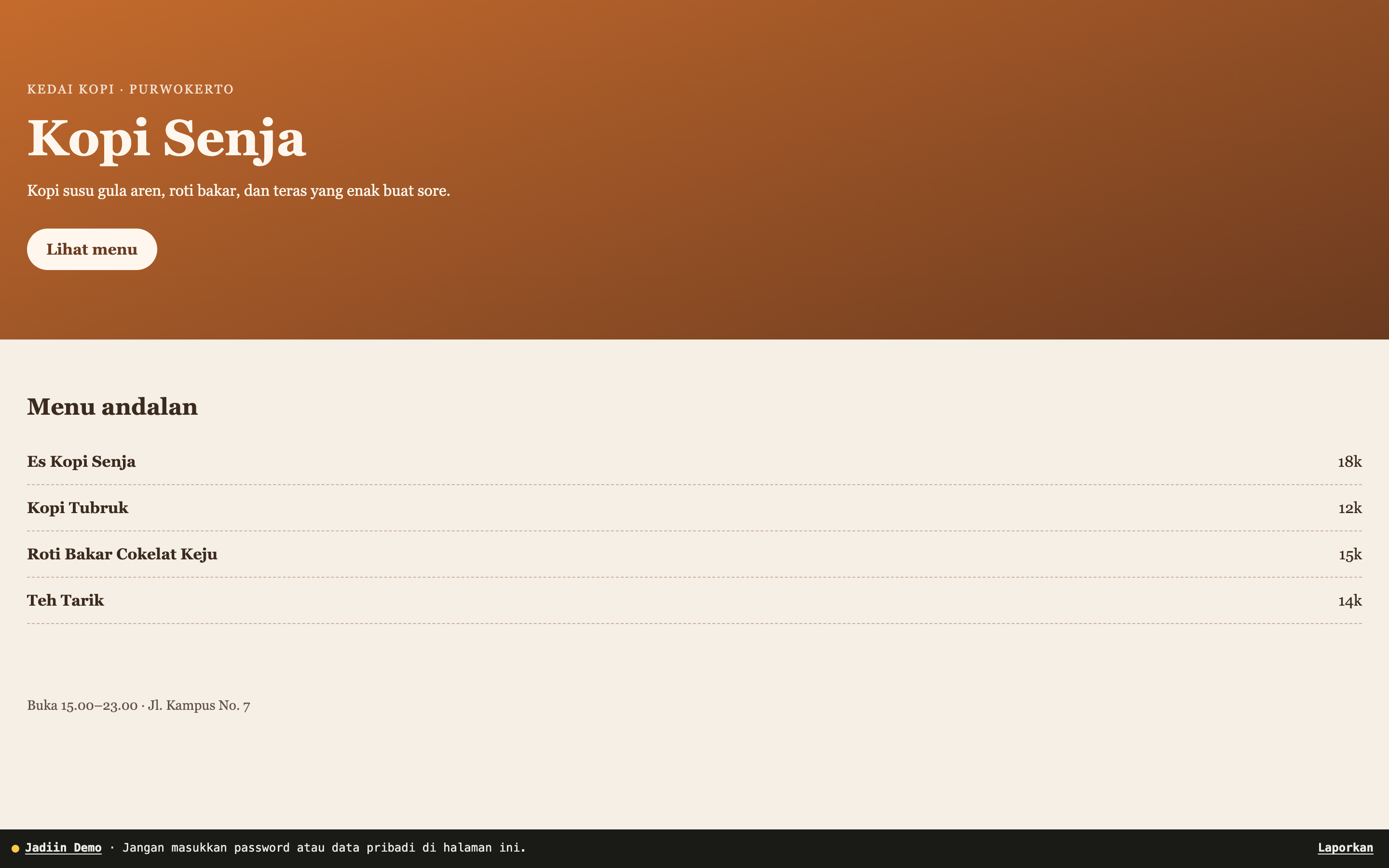
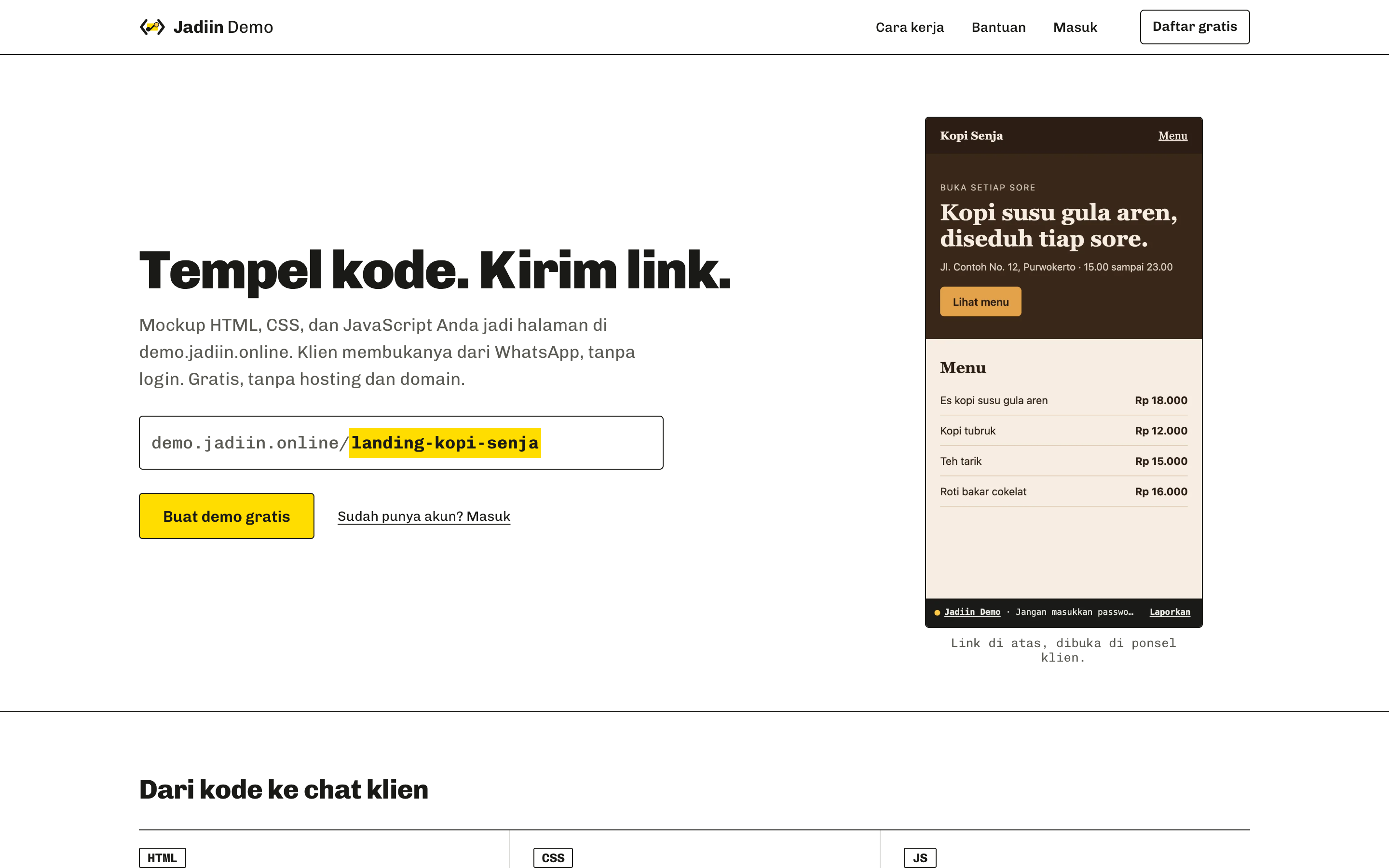
Overview
What this system does.
Jadiin Demo at demo.jadiin.online is for freelancers, small agencies, and students who need to show a client a mockup. An HTML file sent over WhatsApp often will not open properly on a phone, Netlify and Vercel need a repository and settings, and CodePen shows the editor next to the work. Here the user pastes HTML, CSS, and JavaScript, watches the preview update at 360, 390, or 768 pixels or full width, picks a link, and publishes. The client opens it without an account, and the owner sees when the link was first and last opened, without IP addresses or cookies and without counting bots or the owner’s own visits.
Because anyone can publish a page, most of the work went into keeping it from being misused. Every demo runs in a sandboxed iframe under a CSP sandbox and never gets same-origin access, pop-up dialogs, or downloads; form submissions are blocked, the page cannot be framed elsewhere, and search engines are told not to index it. A fixed warning bar, a Report button, and a fixed link preview keep a demo from posing as a bank or brand, and link names with brand names or login lures are rejected. Three different people reporting phishing or malware within 24 hours put a demo on hold automatically, counted by salted IP hashes rather than raw addresses. Admins sign in with mandatory TOTP two-factor login and work from one decision queue: take a demo down, lock a link for good, suspend an account, or stop all publishing in an emergency. The audit log is protected from edits by a database trigger.
The service runs on Bun with Hono and server-side JSX, SQLite, and no build step, with 114 automated tests. I wrote the first version, covering accounts, the sandbox, link rules, moderation, the two-factor admin area, and the CLI, and later the ready-to-send interface, list search and keyboard shortcuts, the phone editor, and HTML emails. Subani Charis Prasetya redesigned the public pages, wrote the documentation, moved the service from Docker to systemd on its own server, and added the form-action rule and admin email alerts.
Feature inventory
Highlights
17 capabilities verified against the project source.
Editor and links
- HTML, CSS, and JavaScript fields with a live preview at 360, 390, or 768 pixels or full width
- Live link-availability check, a 1 MB code limit, and separate draft and published versions
- Code and Preview toggle for editing on a phone
- Demo list with search, keyboard shortcuts, and a Send via WhatsApp button
- First- and last-opened times without IPs or cookies, excluding bots and the owner’s visits
Accounts
- Email sign-up with verification; unverified accounts can draft but not publish
- Passwords hashed with Argon2id and checked against a list of common passwords
Sandbox and abuse prevention
- Demos in a sandboxed iframe under a CSP sandbox, never with same-origin access, dialogs, or downloads
- Form submissions blocked, framing denied, and demo pages kept out of search indexes
- Fixed warning bar, Report button, and link preview so a demo cannot pose as a brand
- Link rules that reject reserved words, brand names, and login lures, with released links held for 30 days
- Rate limits on ten actions, including sign-up, login, and reports
Moderation and administration
- Reports in six categories, with an automatic hold after three different phishing or malware reporters in 24 hours
- Reporters counted by salted IP hashes; raw IP addresses are never stored
- Admin area behind mandatory TOTP two-factor login, with one decision queue
- Take down, lock links permanently, suspend accounts, or hold all publishing in an emergency
- Audit log kept from edits by a database trigger, and admins created only from the CLI
Capabilities
What it is built to handle.
Implementation highlights documented in the project source.
- Automated tests
- 114
- Passing on Bun
- Reporters to hold a demo
- 3
- Different people within 24 hours
Tech stack
Built with 8 technologies.
- Bun
- Hono
- TypeScript
- SQLite
- Argon2id
- TOTP
- Nginx
- systemd
Common questions
What people usually ask.
Why not send the HTML file directly?
On a phone, an HTML file from WhatsApp often opens as text or without its styles. A link opens in the browser like a finished site, and the client does not see a code editor or need an account.
How is it kept from being used for phishing?
Demo code runs in a sandbox that cannot submit forms or reach the main site, every page carries a warning bar and a Report button, brand and login link names are refused, and three independent phishing reports put a demo on hold until an admin decides.
Who built what?
I built the application and its security core, and later the interface overhaul, search, shortcuts, the phone editor, and HTML emails. Subani Charis Prasetya redesigned the public pages, wrote the documentation, handled the server move, and added the form-action rule and admin alerts.
Same field
Related projects.
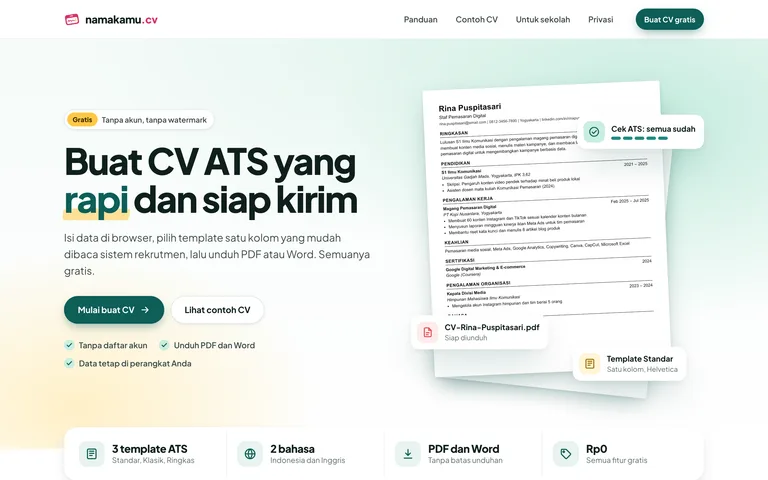
namakamu.cv — Free ATS Resume Builder in the Browser
A free Jadiin Online service for ATS-friendly resumes. No account and no application server: the resume stays in the browser, an ATS check flags problems, and the PDF or Word file is generated on the device.
HTML · JavaScript (ES modules) · jsPDF · Node.js · +2
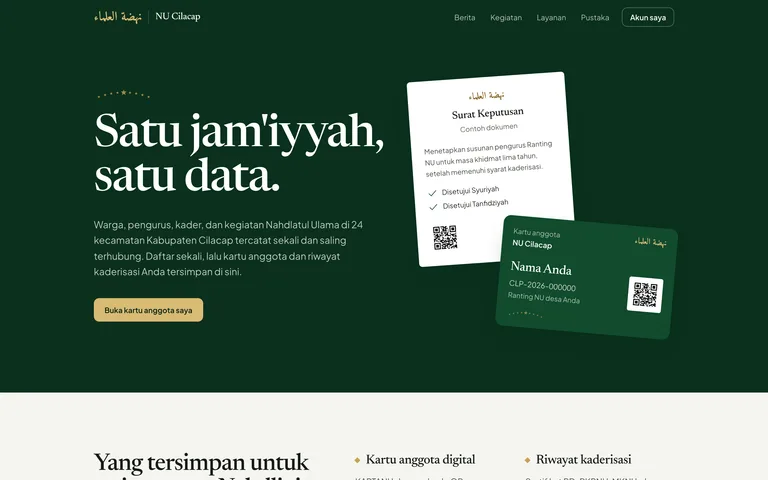
SIJAGAD NU — PCNU Cilacap Integrated Platform
One platform for Nahdlatul Ulama in Cilacap: a single organisation tree from branch to sub-branch, one member registry, tiered digital decrees, meetings with quorum, instructions with receipts, and a leadership dashboard.
Laravel 13 · PHP 8.4 · Blade · Tailwind CSS · +5
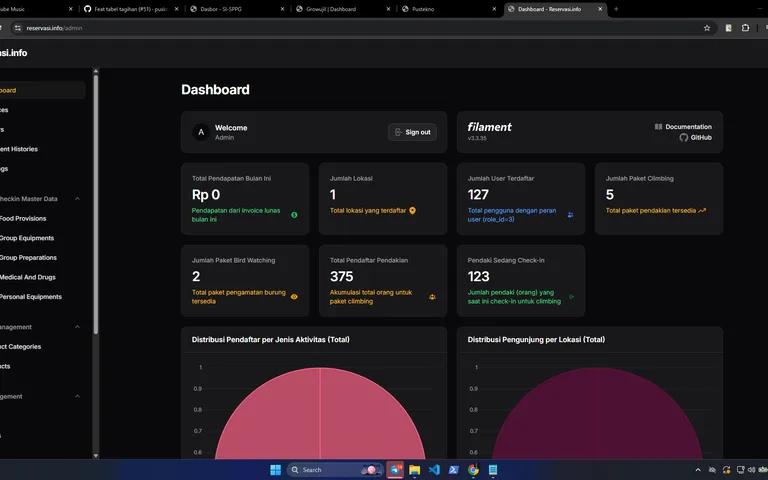
Reservasi.info — Hiking & Nature Tourism Reservations
A hiking and nature-tourism reservation platform with participant quotas, group and equipment records, Tripay payments, a wallet balance, rescheduling, check-in and check-out, and visitor reports.
Laravel 12 · Filament 3 · Blade · Tailwind CSS 4 · +5