Aksara Kendali — Web Gateway for Siskeudes Cilacap
A Go gateway that lets villages in Cilacap open Siskeudes, the village finance application, from a browser over one HTTPS port. It replaces a TSplus portal and can run sessions on Linux without Windows session licences.
Screenshots
Overview
What this system does.
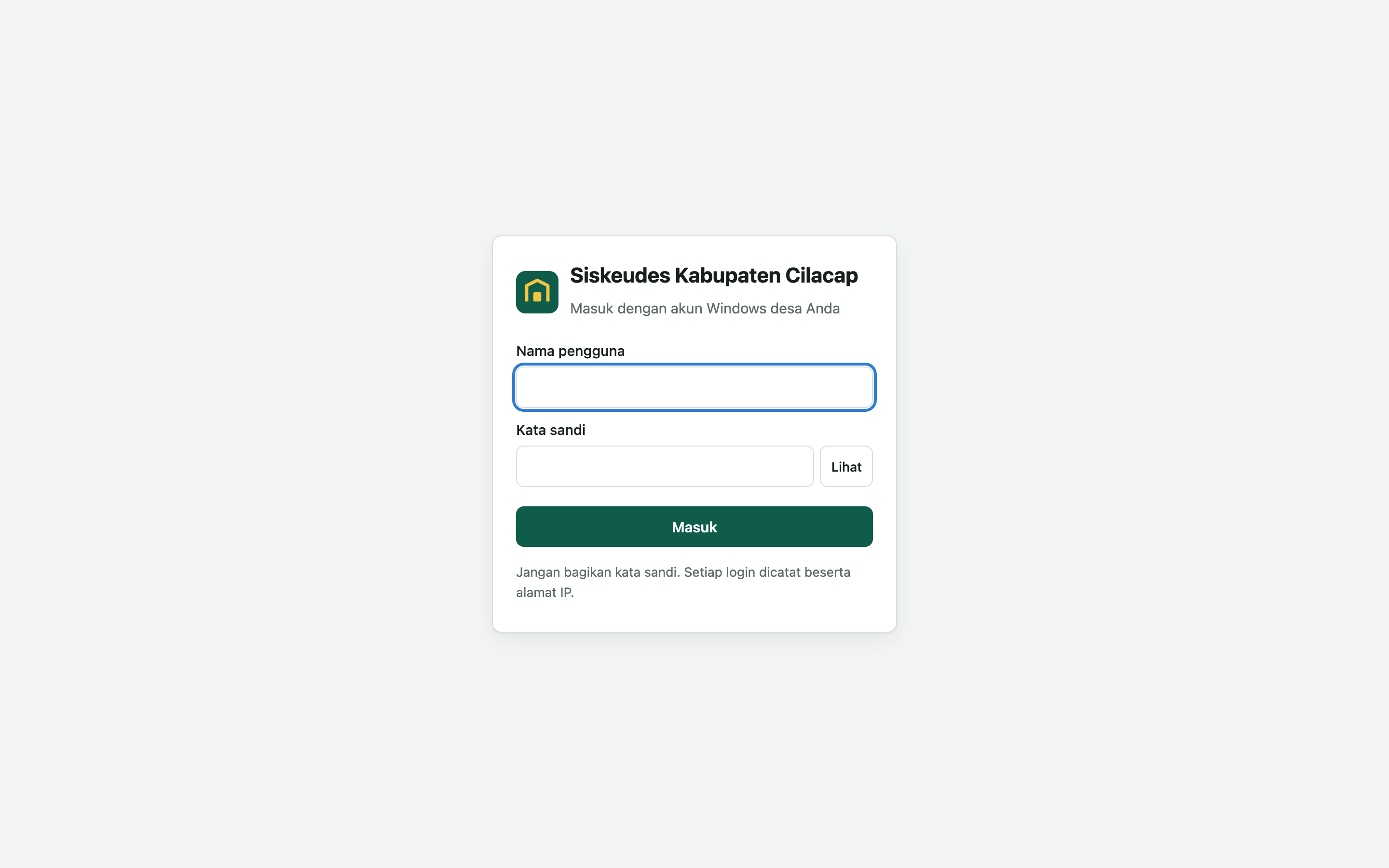
Aksara Kendali is the web gateway for Siskeudes in Cilacap Regency. Village staff open the finance application from a browser, with nothing to install, through a single HTTPS port. Behind the gateway, each session is passed over RDP to a session host, and the gateway decides which host gets it, who may connect, and what is recorded. It replaces the TSplus web portal the regency used before.
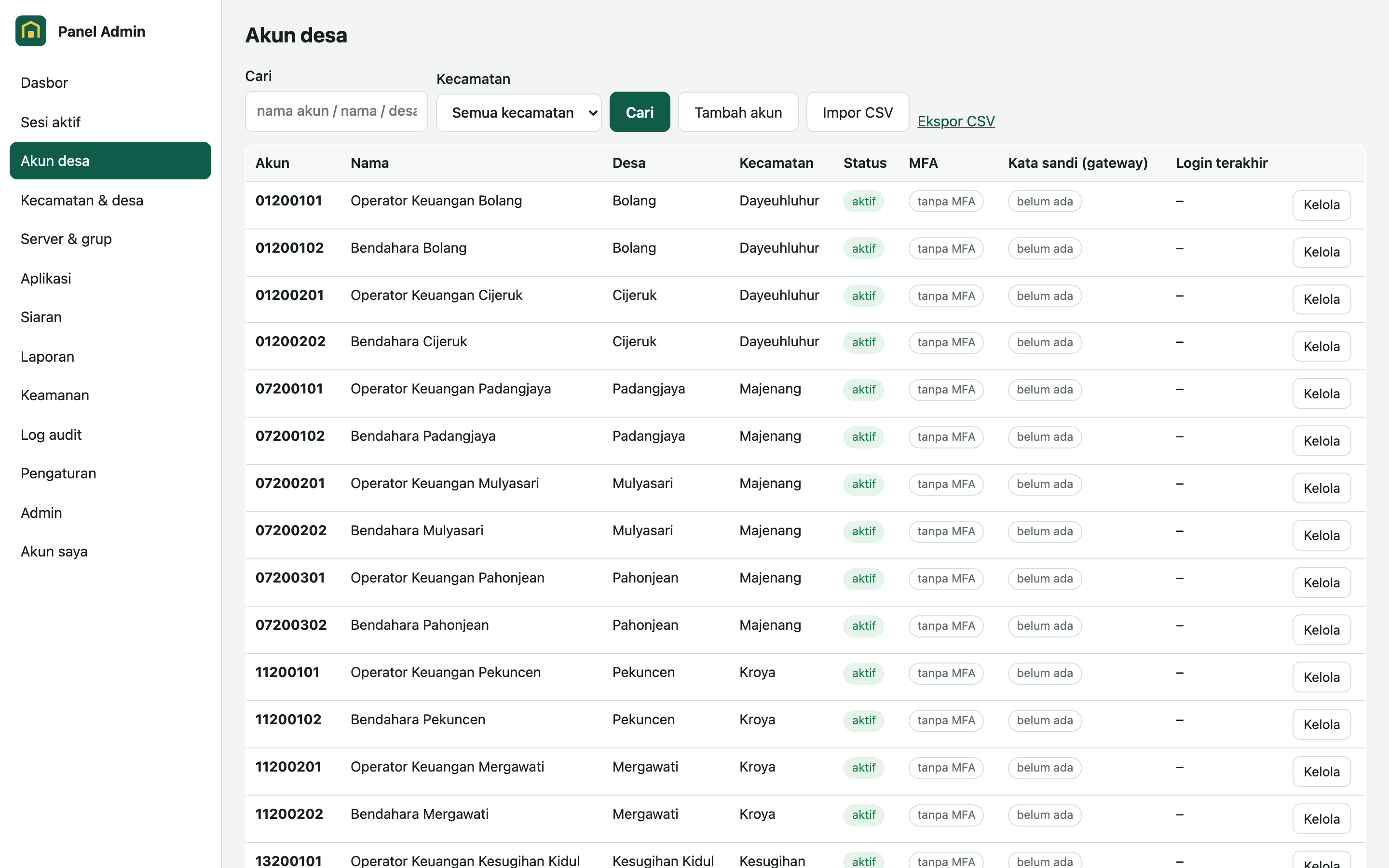
The gateway is one static Go binary with its web assets embedded and SQLite as its database. Apache Guacamole’s guacd handles the RDP-to-HTML5 protocol; authentication, authorisation, the tunnel, host selection, auditing, and the admin panel are written in this project. Admin access is tiered: district admins only see and reset accounts in their own district. Accounts can be imported by CSV, logins need TOTP codes with recovery codes, and repeated failures lock accounts and IP addresses for longer each time. Access can be limited to Indonesian IP ranges taken from APNIC data. Sessions are balanced across hosts by load, hosts can be drained before maintenance, and admins can broadcast messages to everyone connected.
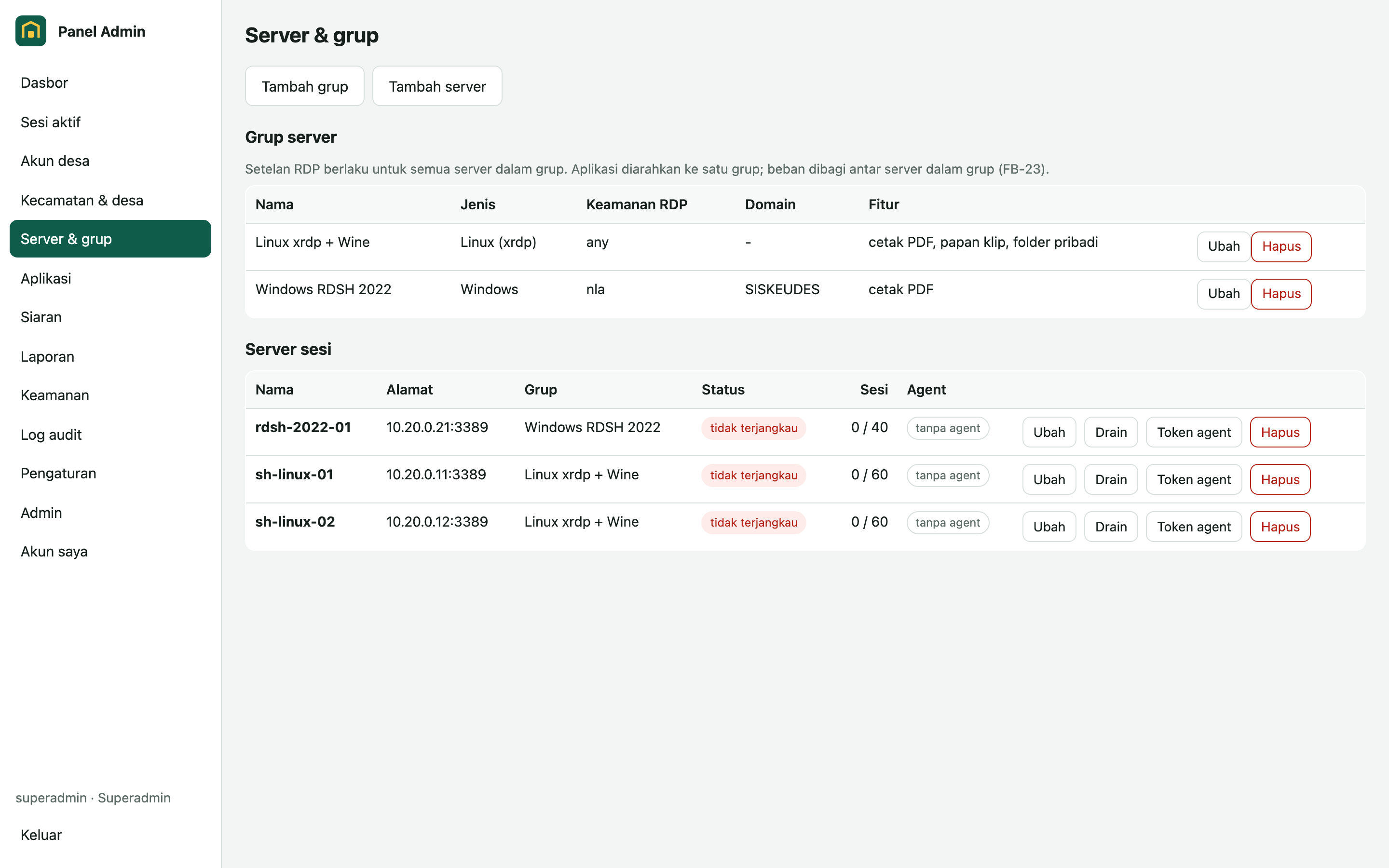
Two kinds of session host are supported. Windows RD Session Host follows the official Microsoft route. The Linux host runs xrdp with Wine, so many villages can work at once without TSplus and without Windows session licences; the gateway sends a one-time 60-second token instead of the account password, and the host checks it through PAM. A small agent on each host reports CPU, memory, and sessions, so the dashboard can raise alerts and the monthly capacity report can estimate how many vCPUs the regency needs. The repository also holds a Windows agent and an emergency toolkit of PowerShell, SQL, and Proxmox scripts for the current servers.
Feature inventory
Highlights
21 capabilities verified against the project source.
Access and session hosts
- Browser access to Siskeudes over HTTPS 443 only, with no client installation
- RDP to HTML5 through Apache Guacamole guacd, with one-time 60-second tunnel tickets
- Session hosts on Linux (xrdp + Wine) or Windows RD Session Host
- Linux hosts verify a one-time token through PAM instead of receiving the account password
- Account modes: verified by Windows, by the gateway, or by Active Directory
Accounts and administration
- District and village structure with CSV import and a dry run first
- Tiered admin roles: superadmin, district admin limited to its region, and auditor
- Village account management, password resets, and forced change after reset
Security
- TOTP MFA with 10 recovery codes, required for admins and optionally per district
- Progressive lockout per account and per IP address
- Allowlist of Indonesian IP ranges built from APNIC delegation data
Sessions
- One session per account with take-over, reject, or free policies
- Load balancing by session count and agent CPU, and drain mode before maintenance
- Broadcasts to every portal session, the login page, and Windows sessions
- Idle disconnect and logoff of disconnected sessions after two hours
- Print to PDF downloaded in the browser and an optional private folder per account
Monitoring and operations
- Dashboard of CPU, memory, and sessions with alerts by webhook, Telegram, or email
- Failed-login reports per IP and account, and a monthly capacity report with vCPU sizing
- Audit log of every admin action and login, kept for at least 366 days
- Windows and Linux agents for metrics, account sync, password resets, and logoff
- Emergency toolkit of PowerShell 2.0, SQL, and Proxmox scripts for the existing servers
Capabilities
What it is built to handle.
Implementation highlights documented in the project source.
- Single open port
- 443
- RDP and SQL Server stay closed to the internet
- Session licences on Linux
- 0
- xrdp and Wine instead of TSplus and RDS CAL
Tech stack
Built with 8 technologies.
- Go
- SQLite
- Apache Guacamole (guacd)
- xrdp
- Wine
- PAM
- Docker
- PowerShell
Common questions
What people usually ask.
Why not keep TSplus?
TSplus and Windows session licences are recurring costs, and the old portal exposed more than one port. The gateway needs only port 443, keeps its own audit log, and with Linux session hosts the number of concurrent villages is no longer tied to licence counts.
Is the RDP protocol written from scratch?
No. guacd from Apache Guacamole is a widely used RDP-to-HTML5 engine, so the project builds on it. Everything around it, from login and MFA to host selection, auditing, and the admin panel, is written here.
What is still unverified?
The README keeps a verification table. The gateway, tunnel, lockout, and Linux host were tested end to end with real guacd and RDP servers, including five concurrent sessions and PDF printing. Real Windows servers, Active Directory, and load at 54 to 320 sessions are listed as not yet tested.
Same field
Related projects.
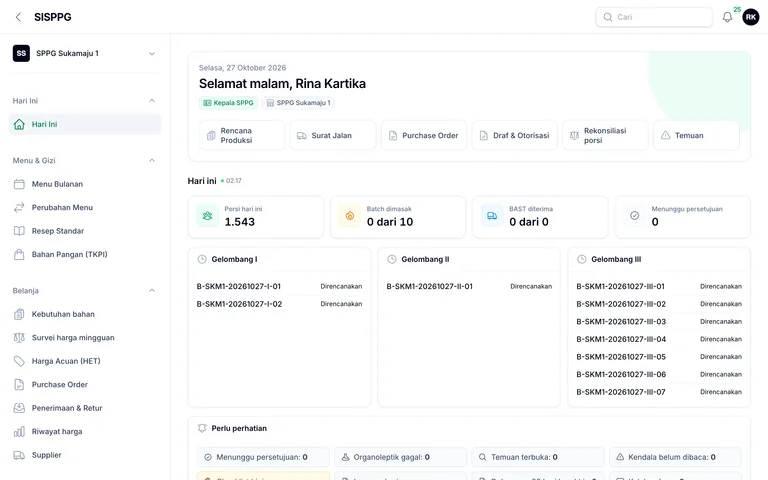
Sistem SPPG — MBG Kitchen Operations (Laravel + Android)
A Jadiin Online product for foundations running Makan Bergizi Gratis kitchens, sold per foundation with its source code, a web app, and an offline-first Android app: monthly menus and nutrition, procurement and stock with FEFO, production with a four-hour consumption countdown, food safety, delivery with digital handover, an append-only cash book, volunteers, and reports.
Laravel 13 · PHP 8.3 · Filament 5 · Laravel Sanctum · +8
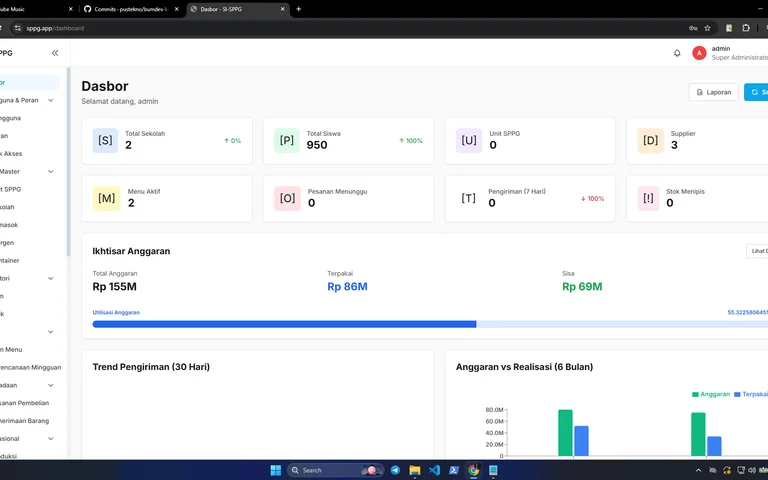
SI-SPPG — MBG Kitchen Operations (Go + React)
A Go and React operations system for Satuan Pelayanan Pemenuhan Gizi: weekly menus, procurement, inventory, production and quality control, distribution, budgets, complaints, and a public transparency portal.
Go 1.24 · Fiber 2 · GORM · PostgreSQL · +15
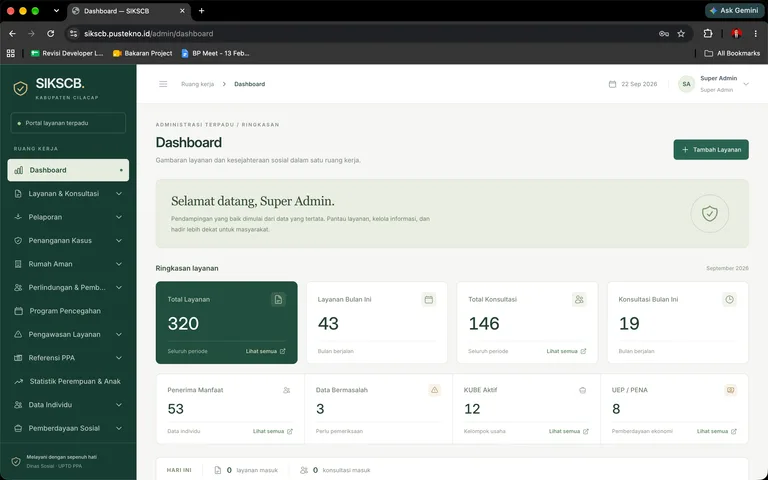
SIKSCB — Social Welfare & UPTD PPA Case Management
An integrated application for the Cilacap Regency social affairs and women & child protection offices: welfare services, violence-case handling with safe houses, social-key data synchronisation, assets, and performance planning.
Laravel 13 · PHP 8.4 · Blade · Livewire · +15