Jadiin Etalase — Online Store for Computer Shops
A Jadiin Online product for computer and electronics shops, sold once with its source code: catalogue with specification filters and a product finder, per-unit stock for second-hand laptops, written warranties with online claims, Midtrans and Tripay payments with deposits, shipping through Biteship or RajaOngkir, B2B levels, promotions, and per-unit profit reports.
See the service: ERP for Village Enterprises & Small Business
Screenshots
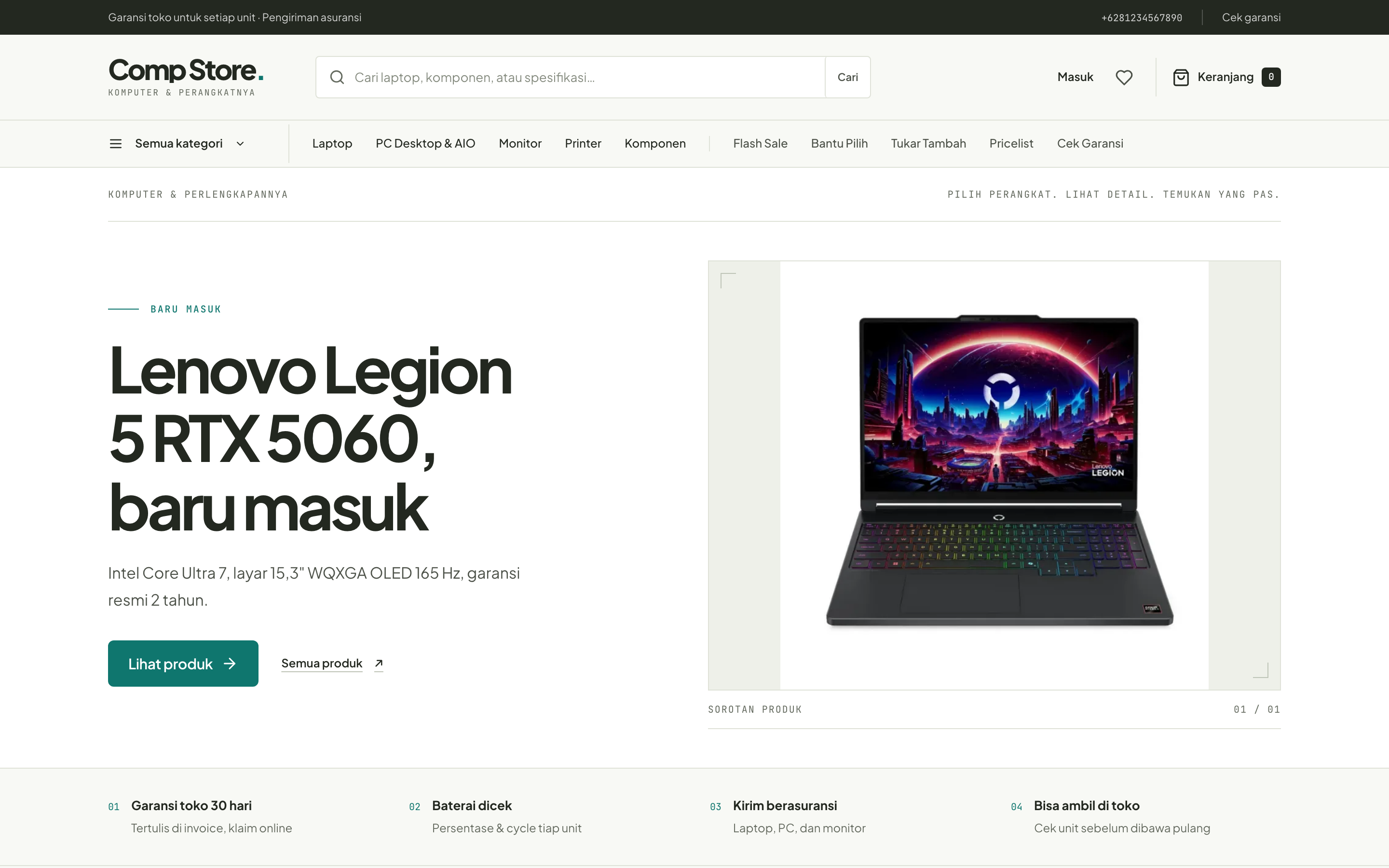
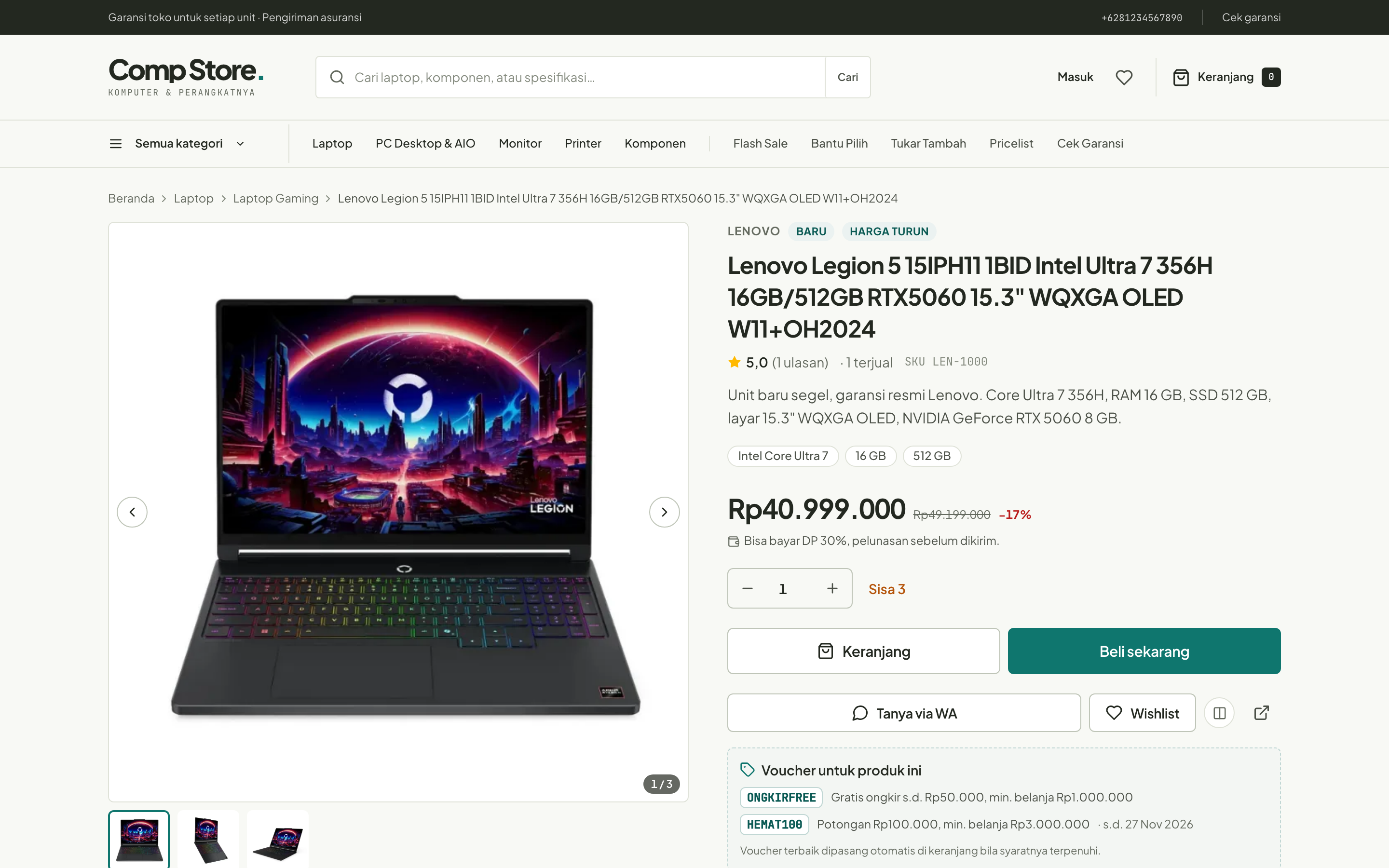
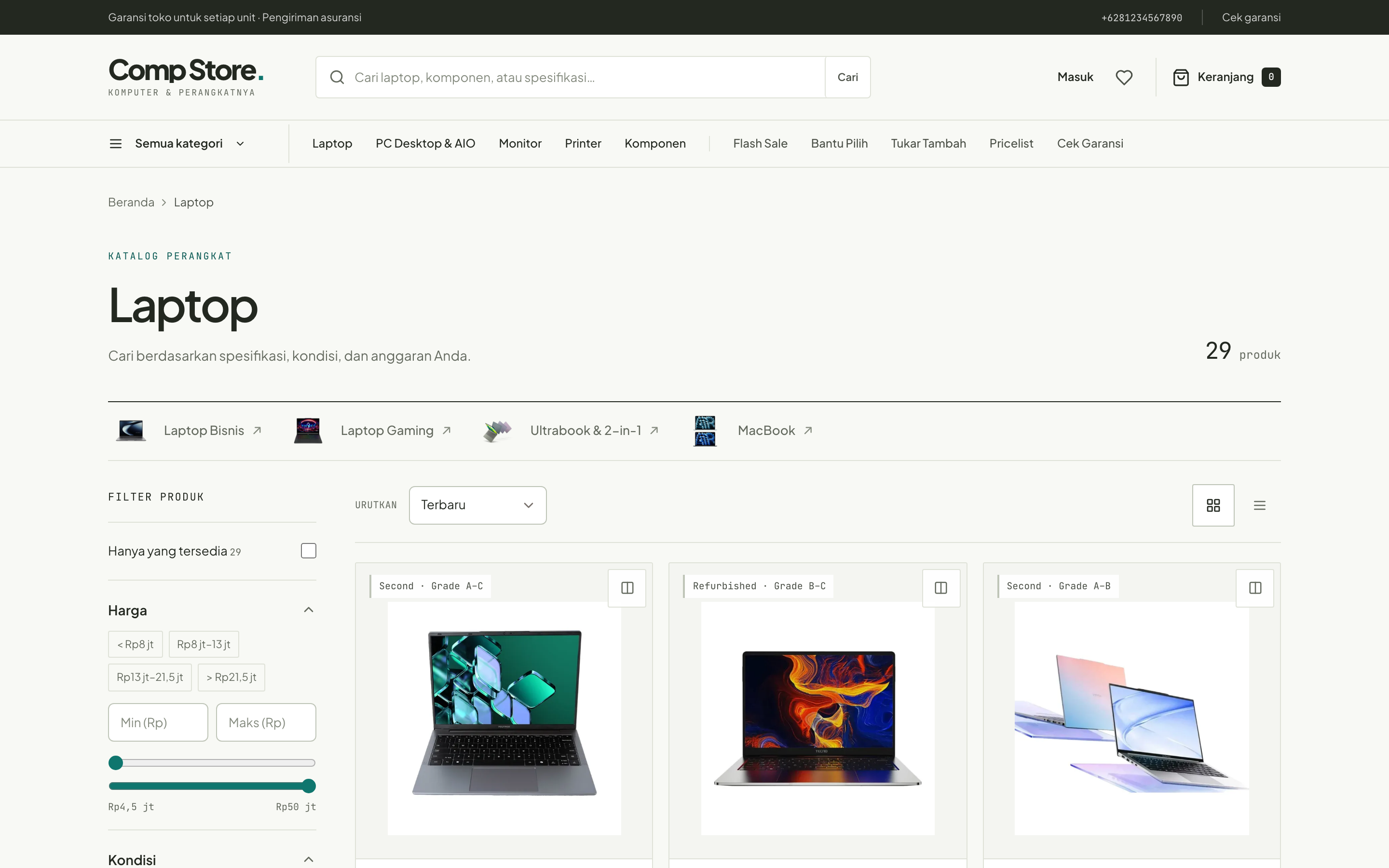
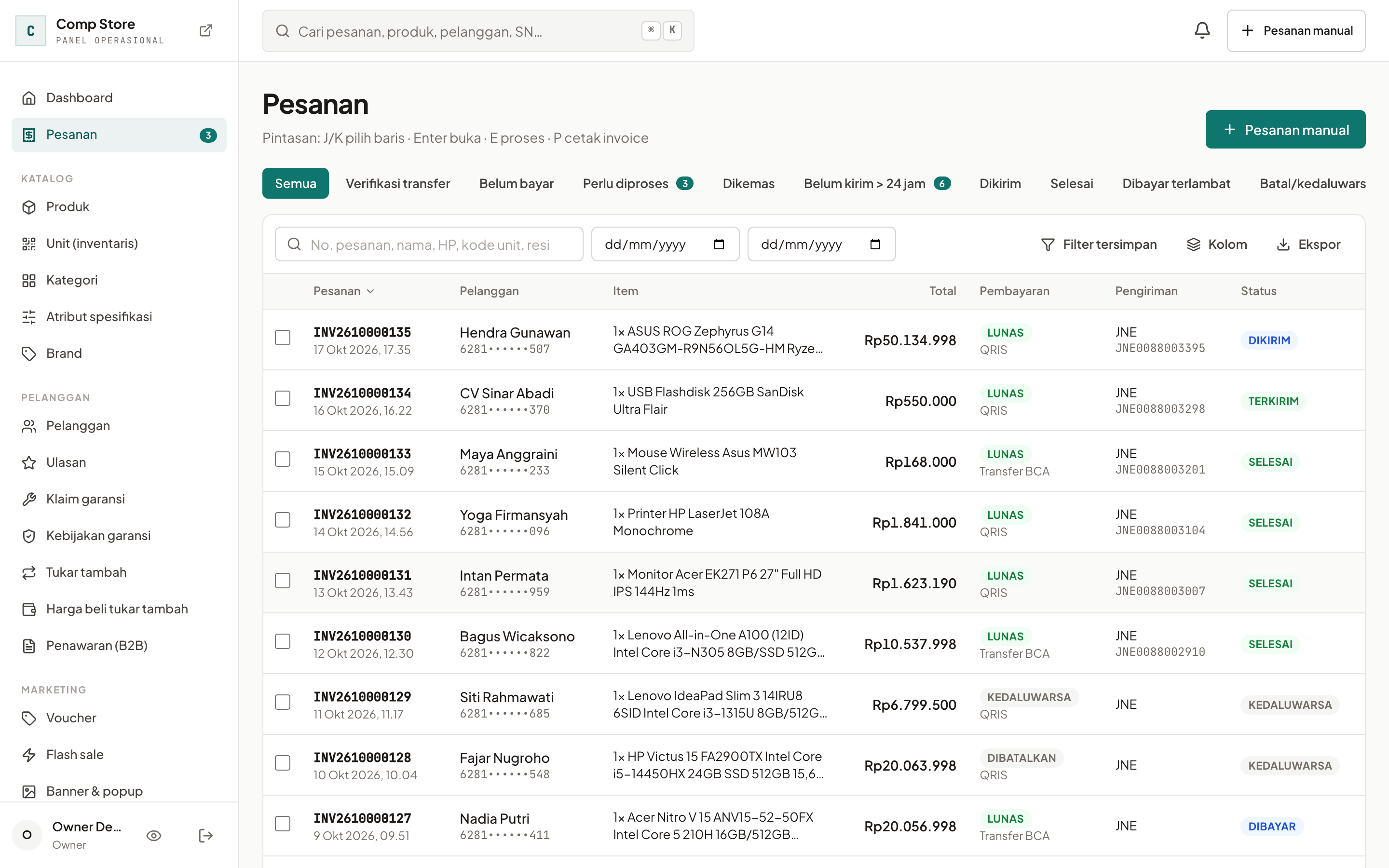
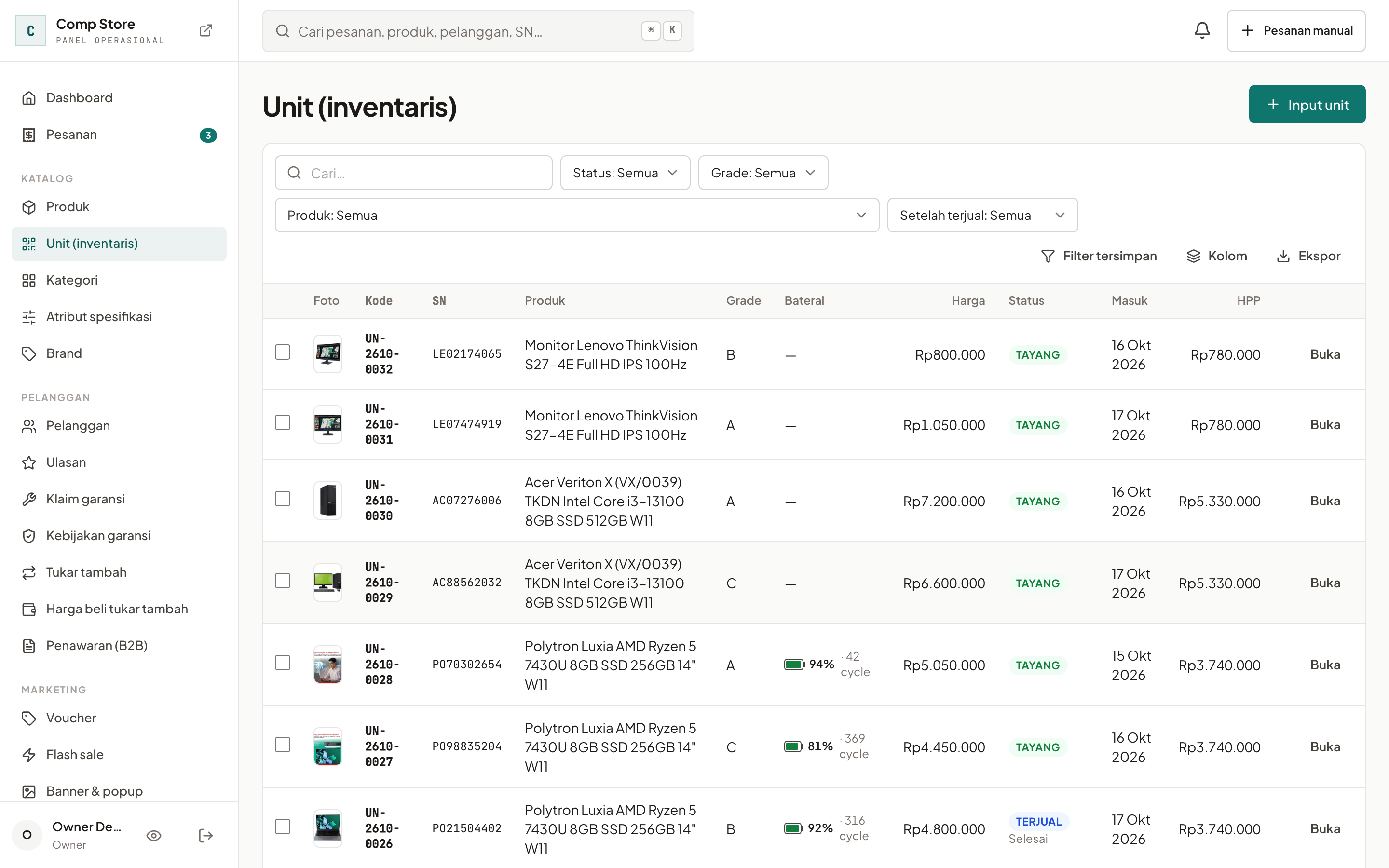
Overview
What this system does.
Jadiin Etalase is the Jadiin Online product for computer and electronics shops. A shop buys it once with the full source code, and it is installed on the shop’s own domain with the first year of hosting included; after that it runs on cPanel shared hosting or a VPS. It is built for the problem ordinary store templates ignore: every second-hand laptop is in a different condition, and online buyers are afraid of being cheated. The demo store is market.jadiin.online. I built it; co-founder Subani Charis Prasetya made a few contributions.
Jadiin Etalase is an online-store application that a shop runs on its own domain, including on shared hosting. The storefront is rendered on the server for search engines, and the admin panel is custom-built. Categories define specification attributes that become catalogue filters and key chips on product cards, and a rule-based product finder maps a buyer’s needs to attribute conditions and shows why each product was recommended. The catalogue structure itself is generic, so categories and filters are defined by each shop.
Products are stocked by quantity or per unit. Per-unit stock suits second-hand and refurbished goods: each unit has a serial number, grade, QC checklist, battery health, and its own photos taken from a phone, and buyers pick the exact unit on the product page. Struck-through prices only appear when that price genuinely applied in the last thirty days, and ratings come only from real buyers. Warranty policies are defined once and read by product pages, invoices, and the public warranty check; claims move through a kanban with WhatsApp updates at every step, and trade-in estimates are calculated from base prices and condition factors.
Orders follow a clear status flow with manual transfer verification, gateway payments, static QRIS, and down payments, label and invoice printing in bulk, courier rates through an aggregator, and pickup slots. Customers can be promoted to reseller or agent levels with their own prices and quotations. Marketing covers vouchers, flash sales, banners, a draggable home-page builder with previews, opt-in WhatsApp broadcasts, a blog, and 301 redirects, and reports include per-unit profit after gateway fees, shipping subsidies, and warranty repair costs.
Feature inventory
Highlights
18 capabilities verified against the project source.
- Server-rendered storefront on the shop’s own domain
- Category attributes as filters and key specification chips
- Rule-based product finder with recommendation reasons
- Stock by quantity or per individual unit
- Second-hand units with serial number, grade, QC checklist, and own photos
- Unit picker on the product page
- Honest struck-through prices and ratings from real buyers only
- Central warranty policies with online claims and WhatsApp updates
- Trade-in estimates from base prices and condition factors
- Gateway payments, transfer verification, static QRIS, and deposits
- Bulk invoice and shipping-label printing
- Courier rates through an aggregator and in-store pickup slots
- Manual orders for WhatsApp and phone sales
- Reseller and agent levels with B2B quotations
- Vouchers, flash sales, banners, and a home-page builder
- Opt-in WhatsApp broadcasts and a blog
- Sales, best-seller, and per-unit profit reports
- Staff roles with two-factor authentication
Tech stack
Built with 9 technologies.
- Laravel 13
- PHP 8.3
- Livewire 4
- Tailwind CSS 4
- Leaflet
- Spatie Permission
- Laravel Excel
- dompdf
- MySQL
Common questions
What people usually ask.
Is it only for computer shops?
It is built and sold for computer and electronics shops, because that is where per-unit stock, written warranties, and trade-in estimates matter most. The catalogue itself is generic: each shop defines its own categories, attributes, and filters.
How does per-unit stock work?
Each unit of a second-hand or refurbished product is recorded with its serial number, grade, QC results, battery health, and real photos, and buyers choose the exact unit they want. The unit is locked until the payment deadline.
Which payment methods are supported?
Payment gateways, manual bank transfers with proof verification, static QRIS, and down payments for products that allow them, all following the same order status flow.
Same field
Related projects.
Jadiin Online — Business Software Company
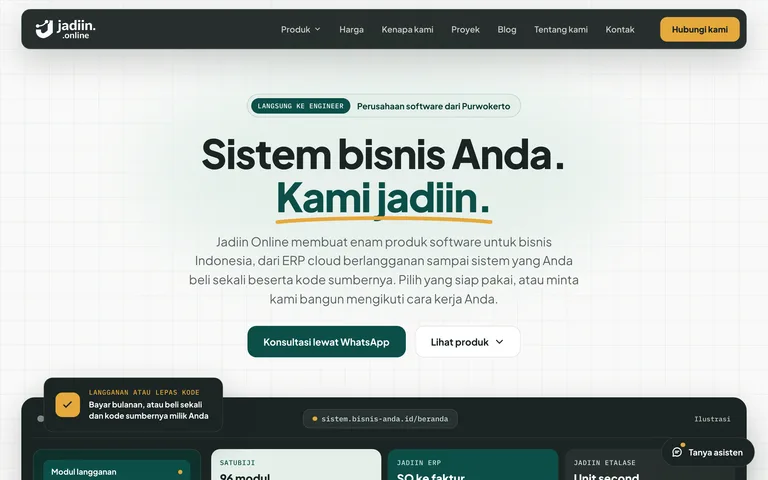
The software company I founded with Subani Charis Prasetya. It makes six products — satubiji, Jadiin ERP, Jadiin Etalase, Jadiin Villa, Sistem SPPG, and Jadiin Distributor — sold by subscription or with their source code, and builds custom systems. jadiin.online is its product and sales site.
Laravel 12 · PHP 8.3 · Blade · Alpine.js · +13
Jadiin ERP — 63-Module ERP Sold with Source Code
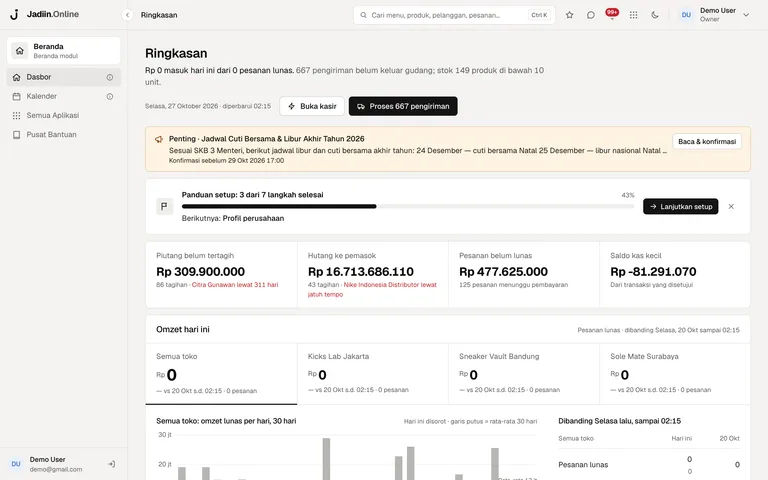
The main product of Jadiin Online: an ERP for distributors, importers, and business groups, with multi-warehouse stock, B2B documents from quotation to invoice, approvals, accounting, tax, payroll, POS, an online store, and 22 industry modules. 63 modules, sold once with the source code.
Laravel 12 · PHP 8.2 · Blade · Alpine.js · +15
Jadiin Distributor — ERP for Distributors & Importers
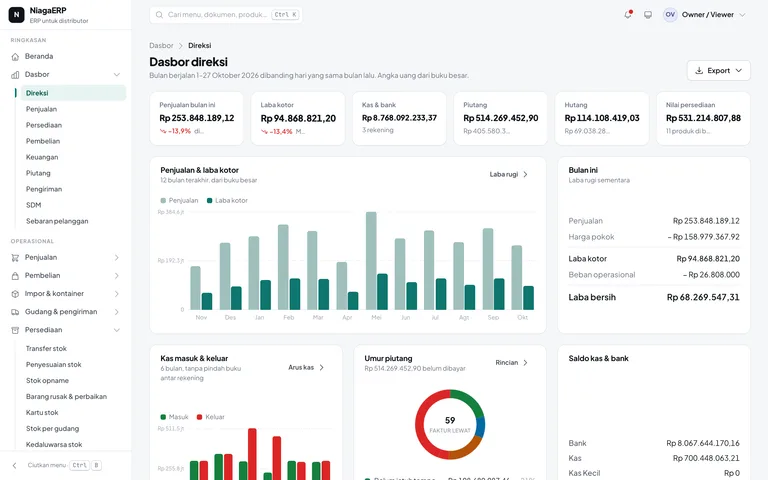
A ledger-based ERP for distributors: quotations to invoices and payments, purchasing with three-way matching, container imports and pre-orders, multi-warehouse stock with batches and expiry, bank reconciliation, HR and payroll, CRM, fleets, and dashboards.
Laravel 13 · PHP 8.4 · Blade · Alpine.js · +5